

Table of Contents
- Why Recording Your Carp Fishing Rigs Matters
- What to Include When Recording a Carp Rig Setup
- Best Rigs for Pressured Carp Waters and How to Document Them
- Using a Carp Fishing Session Log to Track Your Results
- Carp Rig Performance Tracking: Comparing Success Across Sessions
- Step-by-Step: Recording Your First Rig
- Common Mistakes to Avoid When Recording Carp Rigs
- Frequently Asked Questions
Last Updated: September 18, 2026
Why Recording Your Carp Fishing Rigs Matters
Serious carp anglers know that memory alone isn't enough, which is why mastering recording carp fishing rigs matters so much. What worked last month might not work this month. Water conditions change. Fish behaviour shifts. Your rig setup needs to adapt with it.
Recording your carp fishing rigs transforms guesswork into strategy. When you document exactly what you cast, where you cast it, and what happens, you build a personal database of what actually works. This isn't just about catching more fish, it's about understanding why certain approaches succeed and others fail.
The solution is simple: write it down. Better yet, use a system designed specifically for this. When you record carp fishing rigs consistently, you spot patterns that casual anglers miss. You see which rigs perform best in pressured waters. You understand how environmental conditions affect your results. Over time, this data becomes your competitive advantage.
What to Include When Recording a Carp Rig Setup
Recording a rig means capturing the details that actually matter. Vague notes like "good rig" or "caught three fish" won't help you next season. You need specifics.
Core rig components
Document every element of your rig setup. This includes:
- Hook size and pattern (e.g., size 4 curved shank, size 6 wide-gape)
- Hook link material (monofilament diameter, braid type, length)
- Hair rig details (hair length, boilie size, whether you used a bait screw)
- Lead weight (exact weight in ounces, lead type)
- Boom or combi-rig specifics (if using one, note the exact configuration)
- Main line (breaking strain, type, colour)
- Distance from lead to hook (measured in inches)
- Knots used (Palomar, Improved Clinch, other)
Many anglers skip this step because it feels tedious. The truth is, these details are what separate a rig that catches from one that doesn't. A small difference in hair length can reduce your catch rate significantly. A different hook pattern might suit one water but fail at another.
Write these details down before you cast. Don't rely on memory. Even experienced anglers forget whether they used a size 4 or size 6 hook after a long day on the bank.
Environmental conditions
Your rig performs differently depending on where you fish. Record the conditions every session:
- Water temperature (in Celsius)
- Weather (clear, overcast, rainy, windy)
- Water clarity (clear, slightly coloured, heavily coloured)
- Barometric pressure (if you have a meter)
- Time of day (dawn, midday, dusk, night)
- Moon phase (full, new, waxing, waning)
- Wind direction (north, south, east, west)
- Water level (normal, high, low)
These variables matter far more than most anglers realise. A rig that works brilliantly in clear water with high pressure might fail completely in coloured water after heavy rain. By recording conditions alongside your results, you'll see which rigs suit which scenarios.
Best Rigs for Pressured Carp Waters and How to Document Them
Pressured waters demand different approaches. Fish that have seen hundreds of rigs become selective. They reject setups that worked elsewhere. Your documentation becomes critical here because you need to learn what this specific water responds to.
Chod rigs and combi rigs
The chod rig remains effective in pressured waters because it presents the bait at an angle. When recording a chod rig, note:
- Hook size (typically 4-6)
- Boom length (usually 1.5 to 2.5 inches)
- Hair length (short, around 0.5 inches)
- Whether you used a bait screw or free-sliding bait
- Lead weight used
- The exact distance the boom sits from the lead
Combi rigs combine elements of different setups. They're versatile but need careful documentation. Record which elements you combined and why. Did you add a boom to a standard rig? Did you adjust the hair length? These decisions matter when you're trying to replicate success.
Hinged stiff rigs
Stiff rigs work well when fish are cautious. The rig resets quickly after a take, which helps with multiple catches in a session. When documenting a hinged stiff rig, record:
- The stiffness of your boom material (some materials are stiffer than others)
- Exact boom length
- Hook size and pattern
- Whether you used a hinge swivel or tied direct
- Hair length and bait presentation
The hinge point is crucial. Some anglers use a swivel; others tie a loop. Note which method you used and whether it affected your catch rate.
Pop-up and snowman rigs
Pop-ups excel when bottom debris or silt might hide a standard rig. Snowman rigs combine a pop-up with a bottom bait. When recording these setups, document:
- Pop-up buoyancy (how many inches it lifts)
- Pop-up size (typically 12-20mm)
- Whether you used a pop-up screw or adhesive
- The bottom bait (boilie size, type)
- Hair length for the bottom bait
- How high the pop-up sits above the lake bed
Pop-up performance varies dramatically by water and season. In winter, fish sometimes ignore pop-ups entirely. In summer, they can be incredibly effective. Your records will show this pattern.
Using a Carp Fishing Session Log to Track Your Results
A session log is your record of what happened on the water. It's different from your rig documentation. While rig records capture setup details, a session log captures performance.
Each session should include:
- Date and location (which water, which swim)
- Start and end times
- Weather and water conditions (as detailed above)
- Rigs used (reference your rig documentation)
- Number of fish caught (species, approximate weight)
- Time of each catch (what time did each fish come?)
- What the fish took (which bait, which rig?)
- Any changes made during the session (did you swap rigs? adjust your setup?)
- Notes on behaviour (were fish feeding? did they seem cautious?)
Many anglers keep these records in a notebook. That works, but a dedicated system makes it easier to spot patterns later. When you need to compare 20 sessions across different waters and conditions, a notebook becomes unwieldy.
The My Carp Pal digital journal is built for exactly this purpose. You can log sessions quickly, search by water or date, and compare results across months or years.
Carp Rig Performance Tracking: Comparing Success Across Sessions
Once you've logged several sessions, the real work begins: analysis. Carp rig performance tracking means comparing what worked against what didn't.
Start with simple questions:
- Which rig caught the most fish this season?
- Which rig performed best in cold water?
- Did your catch rate improve when you switched to smaller hooks?
- Which bait attracted more fish in pressured waters?
To answer these questions, you need data. This is why recording matters. Without detailed notes, you're guessing.
Create a simple comparison:
| Rig Type | Sessions Used | Total Catches | Average Per Session | Best Conditions |
|---|---|---|---|---|
| Chod rig | 8 | 14 | 1.75 | Clear water, low pressure |
| Hinged stiff | 6 | 18 | 3.0 | Pressured water, silt |
| Pop-up rig | 5 | 7 | 1.4 | Summer, warm water |
This table shows which rig actually performed best. You can see that the hinged stiff rig caught more fish per session, even though you used it fewer times. This tells you to focus on that setup next season.
Build your comparison table from your session logs.
Step-by-Step: Recording Your First Rig
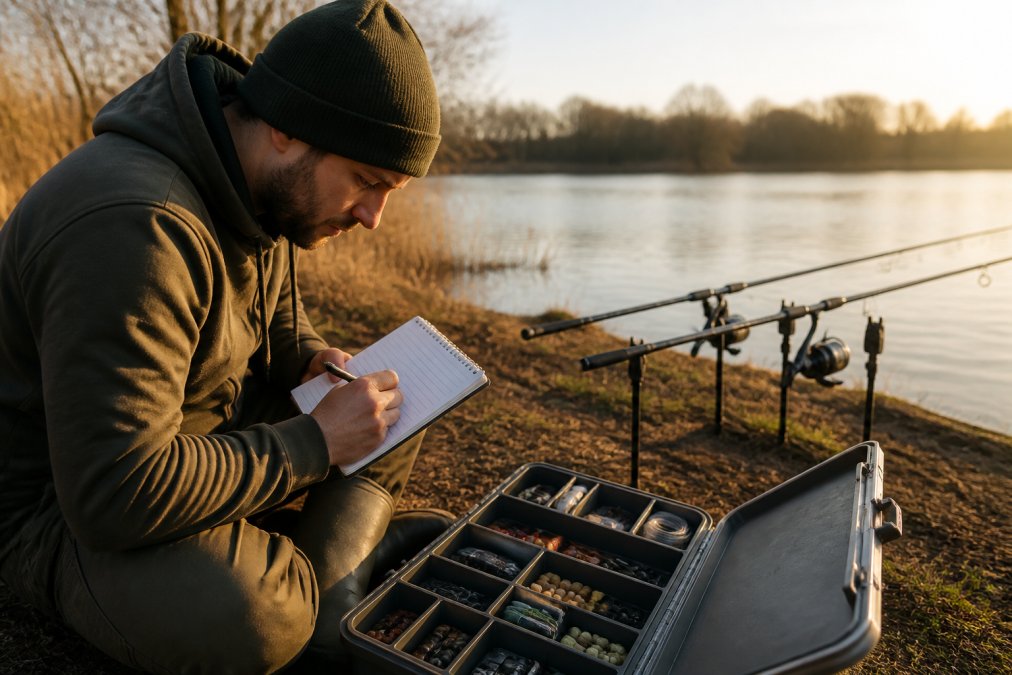
Recording your first rig takes about five minutes. Once you develop the habit, it becomes automatic.
Before you cast
Gather your setup. Lay out your rig on a rig board or mat where you can see all the components clearly. Have a notebook or your phone ready.
Measure each component:
- Use a ruler for hook link length, hair length, and boom length
- Weigh your lead on a scale
- Note the exact hook size and pattern
- Write down the breaking strain of your line
During your session
Every time you get a bite or cast out, note the time. When you catch a fish, record:
- The exact time of the catch
- Which rig you were using
- What depth you were fishing at
- What the fish weighed (approximate is fine)
- Any observations about how the fish fought or behaved
After the session
Before you leave the water, spend five minutes reviewing your notes. Fill in any gaps while details are fresh. Did you forget to record the water temperature? Go back and estimate it based on your memory. Did you forget which bait the last fish took? Write down your best recollection.
Common Mistakes to Avoid When Recording Carp Rigs
Most anglers make the same errors when they start documenting their fishing. Knowing these mistakes helps you avoid them.
Frequently Asked Questions
Why should I keep a record of my carp fishing rigs?
Recording your rigs reveals which setups work best across different waters and conditions. Over time, your session log becomes a personal reference guide showing which rigs caught fish, what water temperatures favoured certain presentations, and how pressure levels affected your success. This systematic approach replaces guesswork with evidence, helping you refine your approach and spend more time fishing effectively rather than experimenting blindly.
What details should I include when logging a carp rig setup?
Record the main line strength, hooklink material and length, hook size and pattern, lead weight, whether you used a pop-up or boilie, and any additives or attractants. Also note water temperature, weather conditions, time of day, and the specific water you're fishing. Include catch results, how long the rig was in the water, and any unusual observations. This level of detail lets you spot patterns and compare rig performance across different sessions.
How does a carp fishing session log help with rig performance tracking?
A session log creates a searchable record of every rig you've tested and how it performed. This data-driven approach reveals your most productive setups and highlights rigs that underperformed, so you stop wasting time on ineffective presentations and focus on proven methods.
Should I record rig performance based on water temperature?
Yes. Water temperature significantly affects carp behaviour and feeding patterns, so logging it alongside your rig results is essential. Rigs that work brilliantly in summer may underperform in winter, and vice versa. By recording temperature with every session, you'll discover which rigs suit cold water, which excel in warm conditions, and how to adjust your presentations seasonally for better catch rates.
0 comments