

Table of Contents
- Why Logging Carp Fishing Sessions Matters
- How Logging Improves Your Catch Rate
- Carp Fishing Diary Templates and What to Record
- Analysing Carp Fishing Session Data for Better Results
- Best Carp Fishing Apps for Anglers
- Preserving Your Fishing Memories and Achievements
- Getting Started with Your Carp Fishing Log
- Frequently Asked Questions
Last Updated: September 27, 2026
Why Logging Carp Fishing Sessions Matters
Keeping a record of your carp fishing sessions transforms how you approach the water. Most anglers rely on memory alone, what worked last month, which rig caught fish at that particular lake, how the weather affected the bite. Memory fails. Details blur. Patterns disappear.
The moment you start logging carp fishing sessions, everything changes. You stop guessing and start learning. You capture specifics: water temperature, barometric pressure, moon phase, the exact rig that produced results, how many takes you had, what time of day proved most productive. Over weeks and months, these individual sessions become a personal database of success.
This isn't theoretical. Anglers who maintain detailed records consistently outperform those who don't. They return to proven tactics. They avoid repeating mistakes. They adapt their approach based on real data from their own experience, not generic advice from forums or magazines. Logging carp fishing sessions gives you that edge, a private archive of everything that works for you, on your waters, in your conditions.
How Logging Improves Your Catch Rate
When you review past sessions methodically, patterns emerge that would otherwise stay hidden. You notice that certain rigs consistently outperform others on specific waters. You see that your best sessions cluster around particular weather conditions or times of year. You recognise which baits triggered the most confident takes.
This feedback loop accelerates learning. Instead of waiting five years to accumulate intuition, you compress that knowledge into months. You test a hypothesis, record the results, review the data, adjust your approach, and test again. Each cycle improves your catch rate because you're no longer experimenting blindly.
A common mistake is assuming memory captures enough detail. It doesn't. You'll remember catching three fish on a particular afternoon, but forget that you only had takes between 2 pm and 4 pm, or that you switched rigs halfway through and the second setup produced all three fish. Those specifics matter enormously when you're trying to replicate success.
The thing nobody tells you about logging is how it forces discipline. When you know you'll be recording your session later, you pay closer attention while fishing. You notice smaller details in real time. You become more observant simply because you're accountable to your own records. That heightened awareness translates directly into better decision-making on the bank.
Carp Fishing Diary Templates and What to Record
A solid carp fishing diary captures the variables that actually influence your success. Start with the essentials: date, water name, session duration, and weather conditions. Then layer in the specifics that separate average logs from genuinely useful ones.
Record your rigs in detail. Don't just write "method feeder", note the hook size, hair length, boilie diameter, lead weight, and the exact presentation you used. This specificity matters because small variations sometimes make the difference between blank sessions and productive ones.
Water conditions deserve their own section. Temperature, clarity, wind direction, and barometric pressure all affect carp behaviour. If you're fishing multiple waters, these details become crucial for spotting patterns across different venues. Over time, you'll notice that carp respond consistently to certain pressure readings or temperature ranges.
Bait information is equally important. Record which boilie flavour you used, whether you pre-soaked it, how many you introduced, and crucially, which bait produced takes. Many anglers discover through logging that one specific flavour consistently outperforms others on their home water, knowledge they'd never have gained without detailed records.
Capture your results honestly: number of takes, number of landed fish, sizes, and the exact times of any action. Include notes on what worked and what didn't. If you tried a new rig and it produced nothing, that's valuable data. If you switched tactics mid-session and immediately saw improvement, record that transition point.
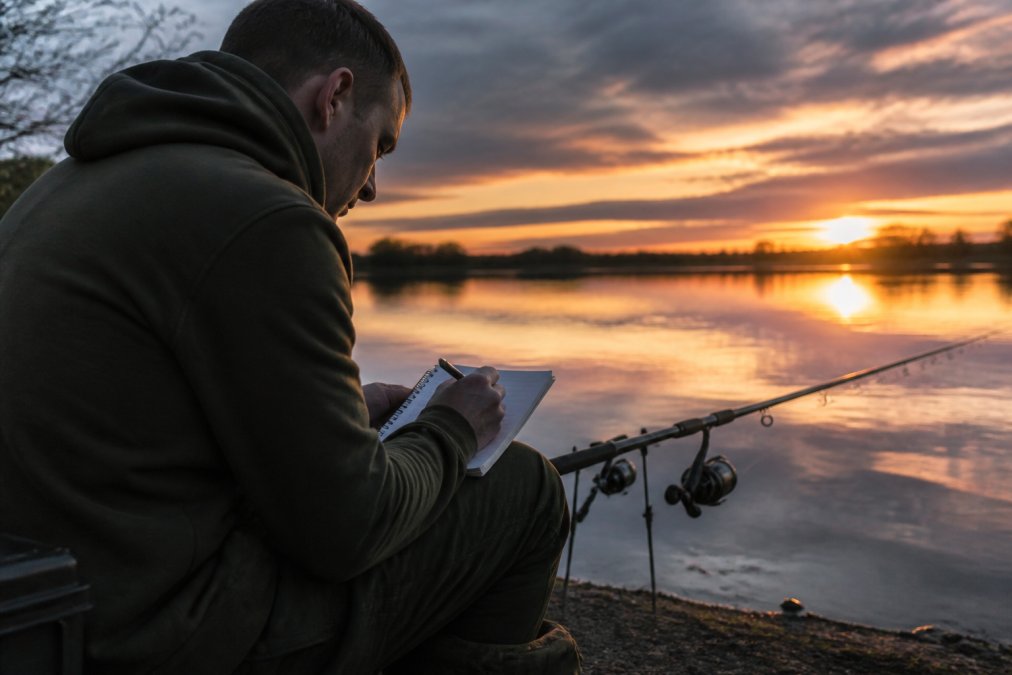
Many anglers find that using a structured template prevents important details from slipping through the cracks. A template ensures you capture the same variables every session, making comparisons between outings far more reliable.
Analysing Carp Fishing Session Data for Better Results
Raw data means nothing until you analyse it. Set aside time each month to review your logged sessions and look for patterns. Which waters have produced your best results? Which rigs consistently outperform others? Do certain weather conditions trigger more aggressive feeding?
Start by grouping sessions by water. Compare your success rates across different venues. You might discover that one lake consistently produces better results than another, which helps you prioritise your fishing time. You might also notice that your catch rate at a particular water has improved over time, evidence that your learning is working.
Next, analyse your rig performance. If you've tested three different hair lengths over several months, your logs will show which one produced the most takes. This data-driven approach removes guesswork. You stop fishing with rigs you like and start fishing with rigs that actually work on your waters.
Weather analysis reveals how carp respond to changing conditions. You might discover that your best sessions occur when barometric pressure is rising, or that you catch more fish in overcast conditions than bright sunshine. These insights let you time your fishing trips strategically around conditions most likely to produce results.
The real power emerges when you cross-reference variables. You might find that a specific rig, fished with a particular bait, during rising pressure, in overcast conditions, produces your highest success rate. That's the kind of precise insight that separates consistent performers from casual anglers.
Best Carp Fishing Apps for Anglers
Digital logging tools make the process frictionless. A dedicated carp fishing app lets you record sessions quickly, without fumbling through notebooks on the bank. The best apps are designed specifically for carp anglers and understand what data matters.
Look for an app that lets you log water conditions with minimal fuss, ideally with quick-select options for common variables rather than forcing you to type everything. Photo integration is valuable; being able to photograph your catch and attach it to your session record creates a visual archive alongside the data.
A solid app should let you tag rigs, baits, and locations for easy filtering later. When you want to review all sessions using a specific rig at a specific water, the app should surface that data instantly. Without this functionality, your logs become a collection of entries rather than an analysable dataset.
Backup and security matter. Your fishing records represent months or years of accumulated knowledge. Choose an app that automatically backs up your data to the cloud, protecting against phone loss or damage. Equally important: verify that your data remains private and isn't shared with third parties or used for marketing purposes.
My Carp Pal's digital journal is purpose-built for this workflow. It captures all the variables that matter, water conditions, rig specifications, bait details, and results. The app lets you filter and analyse your sessions by water, rig, bait, or any combination, turning months of logging into actionable insights.
Preserving Your Fishing Memories and Achievements
Beyond the practical benefits, logging carp fishing sessions preserves your angling journey. Years from now, you'll want to remember that 38-pound mirror you caught on a summer evening, the lake where you had your best session, the rig that finally cracked a difficult water.
A well-maintained log becomes a personal fishing memoir. It documents your progression as an angler, the rigs you've tested, the waters you've explored, the lessons you've learned. That's worth preserving in its own right, separate from the performance data.
Many anglers discover that reviewing past sessions is genuinely enjoyable. You relive successful outings, remember the conditions that made them special, and reconnect with moments that mattered.
Getting Started with Your Carp Fishing Log
Begin simply. You don't need a complex system to start capturing valuable data. A basic notebook works fine, though a dedicated app removes friction and makes analysis easier later.
| Element | Purpose | Frequency |
|---|---|---|
| Session basics | Establish when and where you fished | Every session |
| Water conditions | Track environmental variables affecting carp behaviour | Every session |
| Rig specifications | Document what worked and what didn't | Every session |
| Bait details | Identify which baits trigger takes | Every session |
| Results | Record catch data and timing | Every session |
| Monthly analysis | Spot patterns and trends | Once monthly |
| Seasonal review | Assess long-term progress | Quarterly |
Frequently Asked Questions
What details should I include in my carp fishing diary?
Record the date, time, water temperature, weather conditions, barometric pressure, moon phase, and location details. Log which rigs, baits, and hooklinks you used, how many fish you caught, their approximate weights, and the time of each catch. Note water clarity, depth, wind direction, and any unusual observations. These specifics reveal patterns that memory alone cannot capture, helping you replicate success across different sessions and waters.
How does keeping a fishing log improve catch rates?
Logging carp fishing sessions creates a searchable record of what worked under specific conditions. When you face similar weather, water temperature, or seasonal patterns, your log shows exactly which baits, rigs, and tactics produced results. This systematic approach replaces guesswork with evidence-based decisions. Anglers who log consistently identify seasonal trends, optimal feeding windows, and location patterns they would otherwise forget or overlook.
Is a digital app better than a paper fishing journal?
Both work, but digital apps offer significant advantages for serious anglers. Apps let you search and filter sessions by date, water, conditions, or catch, instantly revealing patterns. Paper journals require manual review and comparison. Digital platforms also back up your data securely, making your records accessible across devices and protecting years of hard-won knowledge from loss or damage.
How do I spot patterns in my carp fishing session data?
Review your logged sessions by grouping them by season, water temperature, weather conditions, and rig setup. Look for which combinations produced the most fish or largest catches. Track catch times to identify feeding windows. Compare success rates across different baits and hooklink materials. Digital apps that organise this data make pattern spotting straightforward, you can filter by any variable and see which factors correlate with your best results.
Logging carp fishing sessions transforms you from a recreational angler into a systematic learner. You stop relying on memory and intuition, and start building a personal database of what works. My Carp Pal's digital journal makes this process seamless, capturing the data that matters, analysing it when you need insights, and preserving your angling achievements for years to come. Start logging your sessions today and watch your catch rate improve as your knowledge grows.
0 comments